Kurat
Autonomous conversational robot
A companion robot split into three brains — perception, cognition, action — so that any one of them can fail and recover without taking the robot down with it.
Problem
A robot that talks, sees and moves has three subsystems with completely different failure characteristics and timing requirements. Speech recognition stalling should not stop the robot navigating; a lost localization fix should not end a conversation.
Coupling them into one pipeline means the slowest and least reliable component sets the behaviour of the whole robot.
What I built
Three subsystems with independent failure and recovery, running on one embedded platform.
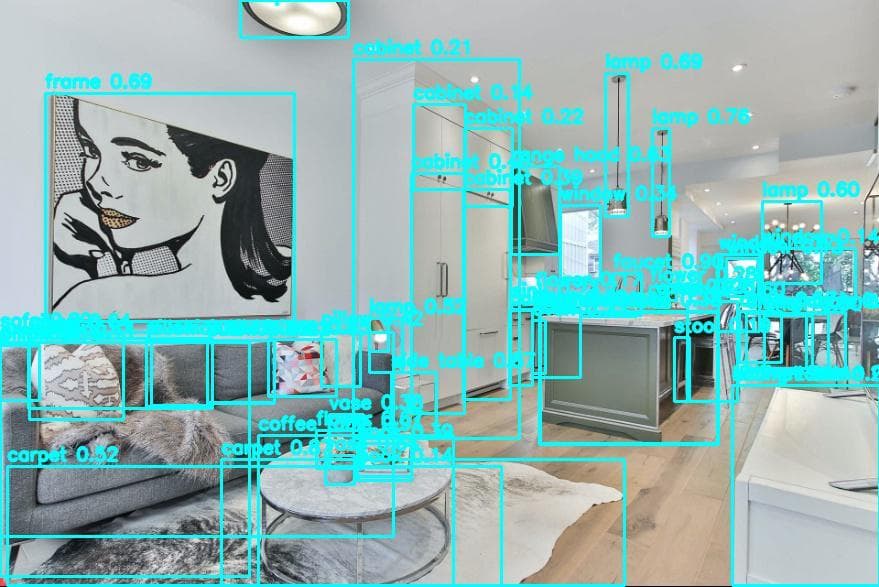
- Perception — YOLOv8 detection and ORB-SLAM3 localization on RealSense D435i RGB-D
- Cognition — speech via Whisper, and the conversation system on top
- Action — Nav2 navigation on the mechanical platform
- Modular autonomy boundaries so each brain degrades on its own
Architecture
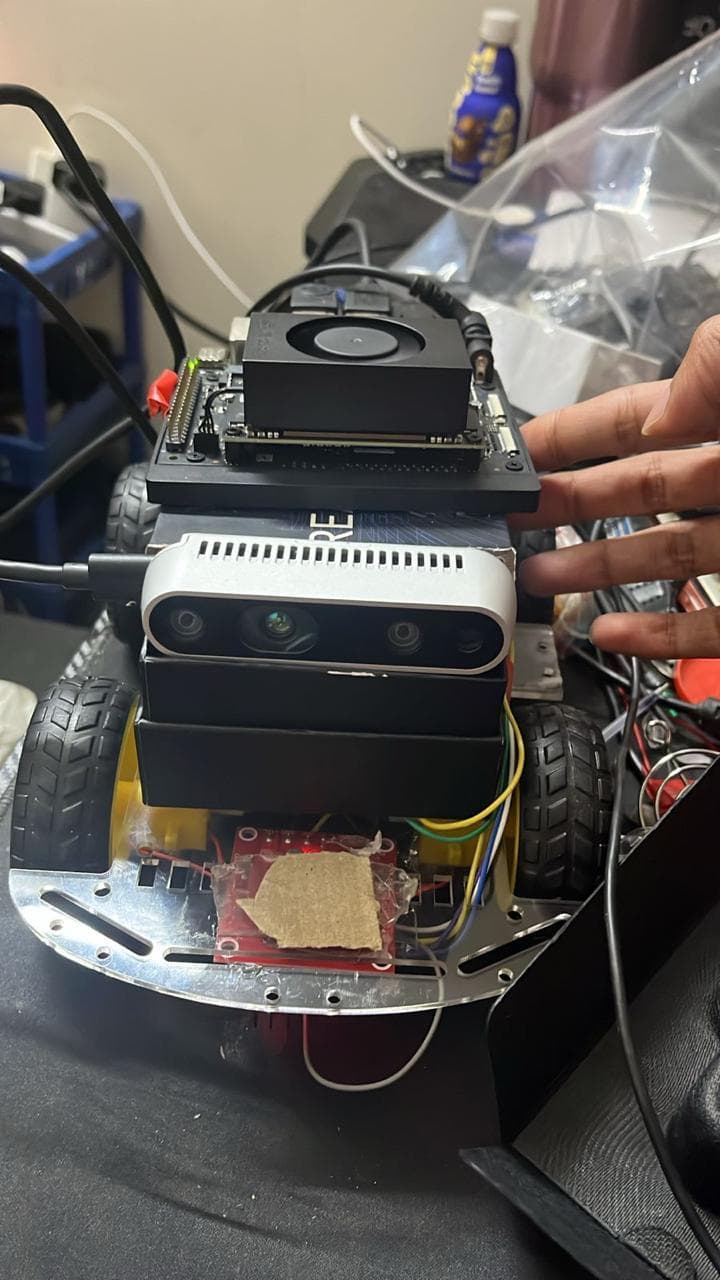
The three-brain split is the architecture: perception, cognition and action communicate through defined interfaces rather than a shared pipeline, so a failure in one is a degraded capability rather than a stopped robot. All three run on a Jetson Orin Nano with a RealSense D435i as the primary sensor.
Three brains, so one can fail
The split is the architecture. Each brain degrades on its own rather than taking the robot down — speech stalling should not stop navigation, and a lost localization fix should not end a conversation.
Perception
YOLOv8 detection and ORB-SLAM3 localization on RealSense D435i RGB-D.
Localization lost — navigation degrades, conversation continuesCognition
Whisper speech recognition and the conversation system.
Speech stalls — the robot keeps movingAction
Nav2 navigation on the mechanical platform.
Path blocked — recovery, while the other two brains carry onEach recovers independently
What runs where
All of it on a single Jetson Orin Nano, which is the constraint that shapes what can run concurrently.
| Brain | Models | Sensor |
|---|---|---|
| Perception | YOLOv8, ORB-SLAM3 | RealSense D435i RGB-D |
| Cognition | Whisper, conversation system | Microphone |
| Action | Nav2 | Odometry and the chassis |
Limitations and failure modes
- Active development — the conversation and navigation subsystems are not yet validated together at length.
- Running four models on a single Jetson Orin Nano constrains what can run concurrently.
Gallery
Attribution
- Built by me
- Kurat is mine — architecture, integration, hardware and software.
- Based on external research
- YOLOv8, Whisper, ORB-SLAM3 and Nav2 are upstream, integrated here.
Related
- SMR300
Autonomy stack for a 300 kg industrial AMR
- SO101 Manipulation and SmolVLA Experiments
Policy training and evaluation on the LeRobot SO101 platform